
EMPODERANDO AL PERIODISMO A TRAVÉS DEL DERECHO DE ACCESO A LA INFORMACIÓN
EL MANUAL ‘LEGAL LEAKS’ AYUDA A PERIODISTAS A OBTENER
INFORMACIÓN USANDO LAS LEYES DE ACCESO A LA INFORMACIÓN
Why is the right of access to information important for journalism?
A Guide for Journalists on How to Access Information
The Legal Leaks Toolkit, developed by Access Info Europe and n-ost, helps journalists access information using Access to Information laws. The Toolkit is available in a generic international version and can be adapted to the legal framework of any country. The existing national versions, translated into local languages, are available below. You can also read more below about our training programme and about how to contact
the Legal Leaks Help Desk.
Why do media experts think access to information is important?
Journalists, activists, and media experts speak about the importance of access to information in their daily work. Watch all interviews here!
That little detail in the relationship between journalists and sources, that little one, is so important that could change the way in which we tell stories.
It is extremely important that there is this mechanism that you can use as a journalist to say «Hang on a minute, you need to give us this, because we have a right to know».
It’s a great way to get stories, it’s a great way to fin out what governments in particular are doing, it’s a great way to find out where money goes, it’s a great way to prove accountability.
The right of access to information is very important for the journalists’ work; it’s important for everyday work, but it’s even more important for investigations.
Journalism is about investigation, it’s about asking questions; but it’s about documents as well, as a proof for questions, as a proof for answers
Basically, I need access to information to do my job as someone who is supposed to ensure the accountability of politicians, of public officials.
Cover photo: European Parliament via Flickr (CC BY-NC-ND 2.0)
ÚLTIMAS NOTICIAS SOBRE EMPODERANDO AL PERIODISMO
Soluciones creativas desde las instituciones para mejorar la transparencia
Bez | 15/02/2016 Spanish - A pesar de las limitaciones que presenta la Ley de Transparencia 19/2013, muchas entidades a nivel autonómico y local están intentando aprobar marcos más favorables al derecho de acceso a información y a hacer su actividad transparente para los ciudadanos. Read more...
Board and Partners Meetings
Date: 15-17 February 2016 Location: Madrid, Spain

Lobbying Regulation: An Ongoing Question For Spain
This article was originally published by ALTER-EU. Madrid, 15 February 2016 - Lobbying is currently not regulated in Spain, and despite the entry into force of the new access to information law, it is still almost impossible for the public to find out who is influencing which decision-makers, with what means, and to what effect. This is despite the eruption
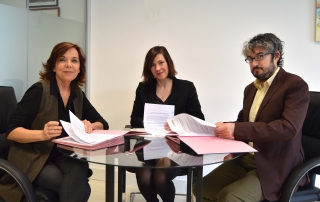
Access Info y el Consejo de Transparencia firman acuerdo para impulsar el derecho a saber
Madrid 9 de febrero de 2016 - Access Info Europe y la Fundación Ciudadana Civio han firmado hoy un protocolo de colaboración con el Consejo de Transparencia y Buen Gobierno para realizar acciones conjuntas de formación y sensibilización en el derecho a saber. La colaboración entre Access Info y el Consejo tendrá como objetivo participar en la ejecución y diseño

El Gobierno pleitea para mantener en secreto documentos… ¡sobre gobierno abierto!
[ACTUALIZACIÓN, 20 de septiembre de 2016 - El día 26 de julio de 2016 Access Info Europe remitió sus alegaciones ante el Juzgado Central de lo Contencioso-Administrativo de Madrid. Actualmente está a la espera de los próximos pasos a seguir dentro del proceso.] Madrid, 9 de febrero de 2016 - El Gobierno ha emplazado un recurso contencioso-administrativo contra el Consejo
Austria: Draft FOI law falls short of international standards
Access Info/IPI analysis welcomes progress, but urges reforms to better guarantee right to information Madrid/Vienna, 8 February 2016 – Austria’s draft freedom of information (FOI) law requires significant further reforms in order to meet international standards governing transparency and the right to information, Access Info Europe and the Vienna-based International Press Institute (IPI) said today upon jointly releasing an analysis