
EMPODERANDO AL PERIODISMO A TRAVÉS DEL DERECHO DE ACCESO A LA INFORMACIÓN
EL MANUAL ‘LEGAL LEAKS’ AYUDA A PERIODISTAS A OBTENER
INFORMACIÓN USANDO LAS LEYES DE ACCESO A LA INFORMACIÓN
Why is the right of access to information important for journalism?
A Guide for Journalists on How to Access Information
The Legal Leaks Toolkit, developed by Access Info Europe and n-ost, helps journalists access information using Access to Information laws. The Toolkit is available in a generic international version and can be adapted to the legal framework of any country. The existing national versions, translated into local languages, are available below. You can also read more below about our training programme and about how to contact
the Legal Leaks Help Desk.
Why do media experts think access to information is important?
Journalists, activists, and media experts speak about the importance of access to information in their daily work. Watch all interviews here!
That little detail in the relationship between journalists and sources, that little one, is so important that could change the way in which we tell stories.
It is extremely important that there is this mechanism that you can use as a journalist to say «Hang on a minute, you need to give us this, because we have a right to know».
It’s a great way to get stories, it’s a great way to fin out what governments in particular are doing, it’s a great way to find out where money goes, it’s a great way to prove accountability.
The right of access to information is very important for the journalists’ work; it’s important for everyday work, but it’s even more important for investigations.
Journalism is about investigation, it’s about asking questions; but it’s about documents as well, as a proof for questions, as a proof for answers
Basically, I need access to information to do my job as someone who is supposed to ensure the accountability of politicians, of public officials.
Cover photo: European Parliament via Flickr (CC BY-NC-ND 2.0)
ÚLTIMAS NOTICIAS SOBRE EMPODERANDO AL PERIODISMO
Polétika: Política + ética
Le Monde Diplomatique En Español | 01/12/2015 Spanish – La ciudadanía pide ética a la política y que ésta ponga a las personas en el centro. La actual crisis económica ha supuesto una brecha entre los gobernantes y los gobernados que ven cómo sus condiciones de vida merman. Polétika es nuestra apuesta por incidir en los partidos políticos y que
Polétika: Política + ética
Le Monde Diplomatique En Español | 01/12/2015 Español– La ciudadanía pide ética a la política y que ésta ponga a las personas en el centro. La actual crisis económica ha supuesto una brecha entre los gobernantes y los gobernados que ven cómo sus condiciones de vida merman. Polétika es nuestra apuesta por incidir en los partidos políticos y que éstos
La transparencia que no llega
Cuatro | 29/11/2015 Español– El 10 de diciembre se cumple el primer año de la ley de transparencia. Por ahora ha habido 3.300 solicitudes de información a las administraciones. Son muy pocas, comparadas por ejemplo con Reino Unido, que recibe unas 50.000 al año. ¿Por qué? Las ONGs denuncian que preguntar es difícil en España. El Consejo de Transparencia lo
“En México, el gobernante buscará hasta el último minuto no dar información”
Compromiso Empresarial | 24/11/2015 Spanish – Durante los tres días que duró este encuentro de más de 2.000 personas, el Distrito Federal mexicano se llenó de ideas, proyectos y planes para los próximos cuatro años con el fin de implementar los planes de acción para abrir los gobiernos de sus miembros a la sociedad. Read more...
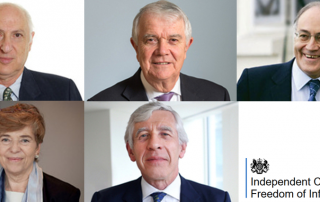
Decision Making Transparency is an Essential Part of Open Government Access Info Europe tells UK FOI Commission
Madrid, 23 November 2015 – Access Info Europe has warned that any move by the UK government to amend the FOI law by expanding blanket exceptions to decision-making transparency or by extending a political veto over disclosure, would be an attack on international standards. These concerns were set out in a submission to the government-appointed FOI Commission, which has been

Giegold Report Welcomed but Could Be More Ambitious Says Access Info
Madrid, 20 November 2015 - Access Info Europe today welcomed recommendations by Sven Giegold MEP, Rapporteur for the Constitutional Affairs Committee of the European Parliament, on greater transparency and accountability ofEU institutions, but has warned that they do not go far enough in addressing the need to improve access to EU documents in law and in practice. The pro-transparency organisation