
EMPODERANDO AL PERIODISMO A TRAVÉS DEL DERECHO DE ACCESO A LA INFORMACIÓN
EL MANUAL ‘LEGAL LEAKS’ AYUDA A PERIODISTAS A OBTENER
INFORMACIÓN USANDO LAS LEYES DE ACCESO A LA INFORMACIÓN
Why is the right of access to information important for journalism?
A Guide for Journalists on How to Access Information
The Legal Leaks Toolkit, developed by Access Info Europe and n-ost, helps journalists access information using Access to Information laws. The Toolkit is available in a generic international version and can be adapted to the legal framework of any country. The existing national versions, translated into local languages, are available below. You can also read more below about our training programme and about how to contact
the Legal Leaks Help Desk.
Why do media experts think access to information is important?
Journalists, activists, and media experts speak about the importance of access to information in their daily work. Watch all interviews here!
That little detail in the relationship between journalists and sources, that little one, is so important that could change the way in which we tell stories.
It is extremely important that there is this mechanism that you can use as a journalist to say «Hang on a minute, you need to give us this, because we have a right to know».
It’s a great way to get stories, it’s a great way to fin out what governments in particular are doing, it’s a great way to find out where money goes, it’s a great way to prove accountability.
The right of access to information is very important for the journalists’ work; it’s important for everyday work, but it’s even more important for investigations.
Journalism is about investigation, it’s about asking questions; but it’s about documents as well, as a proof for questions, as a proof for answers
Basically, I need access to information to do my job as someone who is supposed to ensure the accountability of politicians, of public officials.
Cover photo: European Parliament via Flickr (CC BY-NC-ND 2.0)
ÚLTIMAS NOTICIAS SOBRE EMPODERANDO AL PERIODISMO
Police and Protests Infographics
'Transparency of the Policing of Protests': Report Infographics Below you will find our seven infographics (one interactive, and six question-by-question) on the research conducted for our Transparency of the Policing of Protests Report. Please feel free to download and use these as you wish - why not share them on social media! Findings Question-by-Question Report Summary
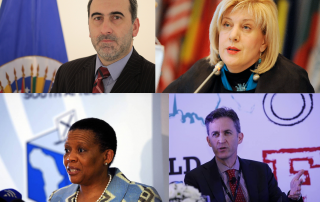
Special Rapporteurs on Freedom of Expression called to endorse Transparency of Media Ownership
Madrid/Brussels, 29 April 2015 – To mark World Press Freedom Day (3 May 2015), Access Info Europe, the European Federations of Journalists, and the International Federation of Journalists have called on the five Special Rapporteurs on Freedom of Expression[1] to endorse the Ten Recommendations on Transparency of Media Ownership[2]. The recommendations, developed during three years of research by Access Info
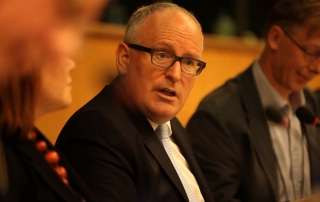
Full Lobby Transparency campaign launched with ALTER-EU debate at the Parliament
This article was originally published on ALTER-EU.org: http://www.alter-eu.org/alter-eus-new-campaign-launched-with-transparency-debate-at-the-parliament Brussels, 29 April 2015 - ALTER-EU launched its new campaign Full lobby transparency now! with a high-profile debate. Held at the European Parliament, panellists included ALTER-EU members and officials from the Commission, Parliament and Council. Here, Commission Vice-President Frans Timmermans renewed the Commission's commitment to a mandatory lobby register but postponed submitting

Making Brussels’ lobbying fully transparent – A debate on the future of the EU lobby transparency register
Start date: Thu, 2015-04-23 09:30 Location: Room ASP 3G2, European Parliament, Brussels Making Brussels’ lobbying fully transparent: A debate on the future of the EU lobby transparency register Organised by Vice President Sylvie Guillaume MEP and the ALTER-EU coalition Vice-President Frans Timmermans, Sylvie Guillaume MEP, Dennis de Jong MEP Inga Reine from Permanent Representation of Latvia to the EU Aidan
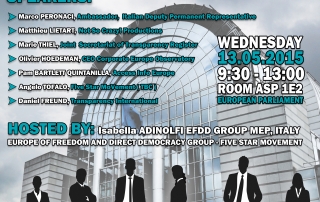
The role of Lobbies in the EU decision-making process: the EU Transparency Register, the role of Council and Permanent Representations
Start date: Wed, 2015-05-13, from 9.30 to 13.00 Location: Altiero Spinelli Building - First floor - Room 1E2, European Parliament, Brussels The role of Lobbies in the EU decision-making process: the EU Transparency Register, the role of Council and Permanent Representations SPEAKERS: Marco PERONACI, Ambassador, Italian Deputy Permanent Representative Matthieu LIETART, Not So Crazy! Productions Marie THIEL, Joint Secretariat of
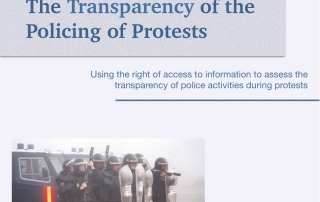
The Transparency of the Policing of Protests
Report finds Europe-wide Lack of Transparency of Policing of Protests Madrid, 24 April 2015 - There is a serious lack of transparency about the use of various types of equipment during policing of protests according to a report published today by Access Info Europe, following research conducted in 42 countries and territories across Europe by means of access to information