
EMPODERANDO AL PERIODISMO A TRAVÉS DEL DERECHO DE ACCESO A LA INFORMACIÓN
EL MANUAL ‘LEGAL LEAKS’ AYUDA A PERIODISTAS A OBTENER
INFORMACIÓN USANDO LAS LEYES DE ACCESO A LA INFORMACIÓN
Why is the right of access to information important for journalism?
A Guide for Journalists on How to Access Information
The Legal Leaks Toolkit, developed by Access Info Europe and n-ost, helps journalists access information using Access to Information laws. The Toolkit is available in a generic international version and can be adapted to the legal framework of any country. The existing national versions, translated into local languages, are available below. You can also read more below about our training programme and about how to contact
the Legal Leaks Help Desk.
Why do media experts think access to information is important?
Journalists, activists, and media experts speak about the importance of access to information in their daily work. Watch all interviews here!
That little detail in the relationship between journalists and sources, that little one, is so important that could change the way in which we tell stories.
It is extremely important that there is this mechanism that you can use as a journalist to say «Hang on a minute, you need to give us this, because we have a right to know».
It’s a great way to get stories, it’s a great way to fin out what governments in particular are doing, it’s a great way to find out where money goes, it’s a great way to prove accountability.
The right of access to information is very important for the journalists’ work; it’s important for everyday work, but it’s even more important for investigations.
Journalism is about investigation, it’s about asking questions; but it’s about documents as well, as a proof for questions, as a proof for answers
Basically, I need access to information to do my job as someone who is supposed to ensure the accountability of politicians, of public officials.
Cover photo: European Parliament via Flickr (CC BY-NC-ND 2.0)
ÚLTIMAS NOTICIAS SOBRE EMPODERANDO AL PERIODISMO
Timmermans takes swipe at MEPs on transparency
euobserver | 23/04/2015 English – EU commission vice-president Frans Timmermans has taken a swipe at MEPs who preach transparency but have not implemented the same rules as the commission when it comes to meetings with lobbyists. Making a pointed reference to this "august" building during a transparency debate on Thursday (23 April), Timmermans noted that while the parliament asks many questions of him, it
Interior da la callada por respuesta: ninguna petición de información contestada en 2 años
El Confidential | 21/04/2015 Spanish – No sabe, no contesta. Esta es la respuesta más habitual de la Administración a las solicitudes de información de los españoles, según se desprende del informe Tuderechoasaber 2014, publicado por la Fundación Ciudadana Civio y Access Info Europe y que evalúa la información facilitada por las instituciones públicas a petición de los ciudadanos. Read more...
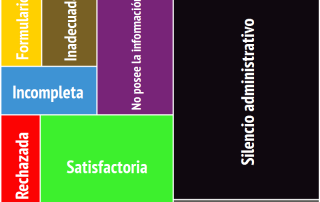
Informe de Tuderechoasaber.es 2014
Las instituciones reducen su uso del silencio administrativo, aunque es mayoritario como obstáculo para la transparencia » El silencio, primer baremo de la opacidad institucional, baja del 57% en 2013 al 42,7% gracias a una mejora sustancial de las entidades locales; las respuestas satisfactorias también aumentan » La Fundación Ciudadana Civio y Access Info Europe presentan el Informe Tuderechoasaber 2014, que
International Journalism Festival – «An Italian FOIA: watch this space»
Date: 18 April 2015, 11am Location: Sala del Dottorato, Piazza IV Novembre 6, Perugia, Italy
La falta de transparencia de los lobbies en España impulsa la corrupción
La Información | 16/04/2015 Spanish – La sinergia entre los lobbies y la administración pública levanta numerosas suspicacias. El término lobbista va inevitablemente acompañado de calificativos como desconfianza, intercambio de favores o corrupción. Read more...

Legal Leaks training in Ankara: Empowering Turkish journalists to access information from European institutions and public bodies in Europe
This article was originally published by UNESCO. What are the grants received from the European Union (EU) in Turkey? Who are the beneficiaries? How were they decided? And, who lobbied in those decisions? Accessing this type of information can be a source of interesting and original stories for journalists. European Union institutions have information about each and every country, not