
EMPODERANDO AL PERIODISMO A TRAVÉS DEL DERECHO DE ACCESO A LA INFORMACIÓN
EL MANUAL ‘LEGAL LEAKS’ AYUDA A PERIODISTAS A OBTENER
INFORMACIÓN USANDO LAS LEYES DE ACCESO A LA INFORMACIÓN
Why is the right of access to information important for journalism?
A Guide for Journalists on How to Access Information
The Legal Leaks Toolkit, developed by Access Info Europe and n-ost, helps journalists access information using Access to Information laws. The Toolkit is available in a generic international version and can be adapted to the legal framework of any country. The existing national versions, translated into local languages, are available below. You can also read more below about our training programme and about how to contact
the Legal Leaks Help Desk.
Why do media experts think access to information is important?
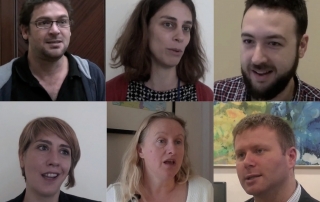
Journalists, activists, and media experts speak about the importance of access to information in their daily work. Watch all interviews here!
That little detail in the relationship between journalists and sources, that little one, is so important that could change the way in which we tell stories.
It is extremely important that there is this mechanism that you can use as a journalist to say «Hang on a minute, you need to give us this, because we have a right to know».
It’s a great way to get stories, it’s a great way to fin out what governments in particular are doing, it’s a great way to find out where money goes, it’s a great way to prove accountability.
The right of access to information is very important for the journalists’ work; it’s important for everyday work, but it’s even more important for investigations.
Journalism is about investigation, it’s about asking questions; but it’s about documents as well, as a proof for questions, as a proof for answers
Basically, I need access to information to do my job as someone who is supposed to ensure the accountability of politicians, of public officials.
Cover photo: European Parliament via Flickr (CC BY-NC-ND 2.0)
ÚLTIMAS NOTICIAS SOBRE EMPODERANDO AL PERIODISMO
Government fails on election transparency pledge to publish contracts
ComputerWeekly.com | 19/03/2015 English – The UK government has failed to meet its 2010 election pledge to publish all contracts in full as part of its digital reforms of the public sector. Whitehall has published many contracts almost in full after a compromise that allows suppliers to keep secret some information on the grounds of commercial confidentiality. But government has regularly neglected to
Los impactos de la tecnología cívica
25 de marzo de 2015, Londres, Reino Unido Pam Bartlett Quintanilla asistirá a la Conferencia sobre los Impactos de la Tecnología Cívica 2015 (TICTeC 2015 en sus siglas en inglés) para debatir acerca del impacto que las tecnologías cívicas y la democracia digital están teniendo sobre la ciudadanía, la toma de decisiones y los gobiernos de todo el mundo, en

AsktheEU Report on EU Transparency 2011-2012
In the year running up to 28 September 2012, members of the European public presented a total of 214 requests for documents with European institutions and bodies using the AsktheEU.org request platform. As of 23 September, almost 65% of the 214 requests made using AsktheEU.org resulted in full (37%) or partial (28%) disclosure of documents. In a further 19% of
The Anti-Corruption Transparency Monitoring Methodology
This guide on how to test levels of transparency in areas of government prone to corruption was released by Access Info Europe on October 2011, together with the results of the first large-scale monitoring conducted using the methodology in Croatia, conducted by Transparency International Croatia. The “Anti-Corruption Transparency Monitoring Methodology” was presented at the UN Conference of States Parties to
The Right of Access to Information in Cyprus: Report and Recommendations
This report consists of the findings of research into the right of access to information in Cyprus conducted in 2010 by Access Info Europe, KAB and IKME as part of the Access Info Cyprus Project. It was researched, written and edited by: Helen Darbishire and David Pardo of Access Info Europe; Faika Deniz Pasha, Derviş Musannif, Ilke Dagli and Didem
¡Únete a la campaña por la transparencia de los medios!
» Solo en 9 de 20 países el público puede saber quién controla realmente los medios de comunicación. » En 10 de 20 países ni siquiera los organismos reguladores pueden saber quién está detrás de la prensa escrita. En el caso de la prensa digital, la cifra se reduce a 6 de 20 países. Madrid, 4 de marzo de 2014 –