
EMPODERANDO AL PERIODISMO A TRAVÉS DEL DERECHO DE ACCESO A LA INFORMACIÓN
EL MANUAL ‘LEGAL LEAKS’ AYUDA A PERIODISTAS A OBTENER
INFORMACIÓN USANDO LAS LEYES DE ACCESO A LA INFORMACIÓN
Why is the right of access to information important for journalism?
A Guide for Journalists on How to Access Information
The Legal Leaks Toolkit, developed by Access Info Europe and n-ost, helps journalists access information using Access to Information laws. The Toolkit is available in a generic international version and can be adapted to the legal framework of any country. The existing national versions, translated into local languages, are available below. You can also read more below about our training programme and about how to contact
the Legal Leaks Help Desk.
Why do media experts think access to information is important?
Journalists, activists, and media experts speak about the importance of access to information in their daily work. Watch all interviews here!
That little detail in the relationship between journalists and sources, that little one, is so important that could change the way in which we tell stories.
It is extremely important that there is this mechanism that you can use as a journalist to say «Hang on a minute, you need to give us this, because we have a right to know».
It’s a great way to get stories, it’s a great way to fin out what governments in particular are doing, it’s a great way to find out where money goes, it’s a great way to prove accountability.
The right of access to information is very important for the journalists’ work; it’s important for everyday work, but it’s even more important for investigations.
Journalism is about investigation, it’s about asking questions; but it’s about documents as well, as a proof for questions, as a proof for answers
Basically, I need access to information to do my job as someone who is supposed to ensure the accountability of politicians, of public officials.
Cover photo: European Parliament via Flickr (CC BY-NC-ND 2.0)
ÚLTIMAS NOTICIAS SOBRE EMPODERANDO AL PERIODISMO

EU Member States to Implement Directive for Companies to Disclose Non-Financial Information on Environment and Human Rights
Brussels/Madrid, 15 November 2014 - The Directive requiring large EU companies to produce yearly statements revealing non-financial information must now be implemented by Member States following its adoption by the Council of the European Union last month and its publication in the Official Journal of the EU today. The Directive will specifically require businesses to publish information relating to environmental,
Seminario sobre la transparencia y la lucha contra la corrupción
14 de noviembre de 2014, Madrid, España Victoria Anderica will attend the seminar on 'Transparency and Fight Against Corruption' organised by UPyD in the Spanish Parliament, in Madrid, Spain. More information on this event here.
Message to AsktheEU.org Users – Latest news and server transfer
[UPDATE 18 November 2014 - AsktheEU.org was successfully transferred over to the mySociety servers] 13 November 2014 Dear Users and Potential Users of AsktheEU.org First of all, thanks to all our users and all those who have collaborated with AsktheEU.org in the first three years of our existence. AsktheEU.org has become and will continue to serve as an important platform

«If there is something you have always wanted to know, why not ask?» – Interview with Vicky Cann
[Originally published on AsktheEU.org on 13 November 2014] Madrid, 13 November 2014 - Vicky Cann is a campaigner for Corporate Europe Observatory, a research and campaign group working to expose and challenge the privileged access and influence enjoyed by corporations and lobby groups in EU policy making. Vicky makes access to documents requests through AsktheEU.org to expose potential conflicts of

#Luxleaks Scandal Highlights Urgent Need for Corporate Transparency
Comment by Pam Bartlett Quintanilla, Campaigner at Access Info Europe Madrid, 12 November 2014 - Top on the agenda of the European Parliament today is the #luxleaks scandal, uncovered by the International Consortium of Investigative Journalists through the leaking of hundreds of secret tax agreements signed between Luxembourg and large multinational companies, when Jean-Claude Juncker, the new President of the
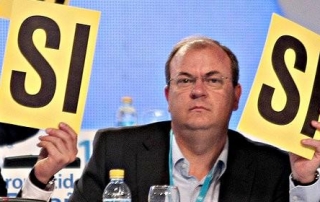
Viajes en el Congreso y en el Senado sí, pero con transparencia
Madrid, 12 de noviembre de 2014 - Ante los recientes escándalos que apuntan a que algunos senadores y diputados usaron dinero público de manera continuada para pagar viajes personales, Access Info Europe, Qué hacen los Diputados y Civio hacen un llamamiento para que se implemente de inmediato la ley de transparencia en las Cortes Generales. La Ley 19/2013, de 9