EMPODERANDO AL PERIODISMO A TRAVÉS DEL DERECHO DE ACCESO A LA INFORMACIÓN
EL MANUAL ‘LEGAL LEAKS’ AYUDA A PERIODISTAS A OBTENER
INFORMACIÓN USANDO LAS LEYES DE ACCESO A LA INFORMACIÓN
Why is the right of access to information important for journalism?
A Guide for Journalists on How to Access Information
The Legal Leaks Toolkit, developed by Access Info Europe and n-ost, helps journalists access information using Access to Information laws. The Toolkit is available in a generic international version and can be adapted to the legal framework of any country. The existing national versions, translated into local languages, are available below. You can also read more below about our training programme and about how to contact
the Legal Leaks Help Desk.
Why do media experts think access to information is important?
Journalists, activists, and media experts speak about the importance of access to information in their daily work. Watch all interviews here!
That little detail in the relationship between journalists and sources, that little one, is so important that could change the way in which we tell stories.
It is extremely important that there is this mechanism that you can use as a journalist to say «Hang on a minute, you need to give us this, because we have a right to know».
It’s a great way to get stories, it’s a great way to fin out what governments in particular are doing, it’s a great way to find out where money goes, it’s a great way to prove accountability.
The right of access to information is very important for the journalists’ work; it’s important for everyday work, but it’s even more important for investigations.
Journalism is about investigation, it’s about asking questions; but it’s about documents as well, as a proof for questions, as a proof for answers
Basically, I need access to information to do my job as someone who is supposed to ensure the accountability of politicians, of public officials.
Cover photo: European Parliament via Flickr (CC BY-NC-ND 2.0)
ÚLTIMAS NOTICIAS SOBRE EMPODERANDO AL PERIODISMO
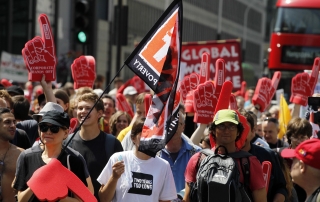
Recommendations on TTIP Transparency Presented to EU Ombudsman
Madrid, 31 October 2014 – Increased disclosure, more proactive transparency of key documents and a more balanced influence of interests were the key issues raised in Access Info Europe’s submission to the public consultation opened by the European Ombudsman on the transparency of the Transatlantic Trade and Investment Partnership (TTIP) negotiations. The talks, conducted between the EU and the US,
Report on Transparency of Media Ownership by Leading Media Policy Expert
Madrid, 31 October 2014 - The 10 Recommendations for Transparency of Media Ownership (TMO) are currently "the most refined checklist of relevant criteria on TMO and the ideal starting point to discuss action points," according to a background report written for the Parliamentary Assembly of the Council of Europe (PACE). The report by Peggy Valcke, one of the leading experts
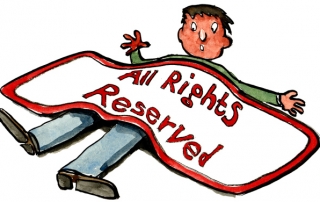
Call for reform of Copyright Rules in the EU
Madrid, 28 October 2014 - Access Info Europe, the specialist right to information campaigners, today joined 32 civil society organisations calling on the European Commission to clarify the framework for copyright within the European Union. The position paper by Free Knowledge Advocacy Group EU calls on the European Commission to bring copyright law into the 21st century, redefining the balance
Lack of Transparency Leads to EU Expert Group Budget Freeze
Madrid, 22 October 2014 - The European Parliament has voted to freeze the budget of the European Commission's Expert Groups for the second time in four years, due to a lack of transparency, conflict of interest issues, and unbalanced stakeholder representation within these advisory groups. A group of cross-party MEPs [1] tabled the amendment to withhold almost €4 million from
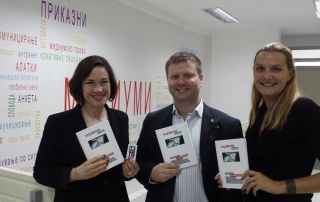
Legal Leaks training in Skopje
Skopje, 20 October 2014 - In the context of the South East Europe Media Forum, a regional conference organized with the support of UNESCO and the European Commission, Access Info Europe and UNESCO held its 6th Legal Leaks training seminar in the South East Europe region in collaboration with the Macedonian Institute for Media. The training took place in Skopje
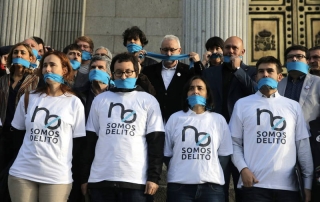
El Comité de Derechos Humanos de la ONU es instado a investigar las violaciones del Derecho a la Información en España
Madrid, 17 de octubre de 2014 - El Comité de Derechos Humanos de la Organización de las Naciones Unidas ha sido instado a investigar las violaciones a la libertad de expresión y al derecho de acceso a la información en España a través de una carta enviada por las principales organizaciones defensoras de la libertad de prensa. Esta es la