
EMPODERANDO AL PERIODISMO A TRAVÉS DEL DERECHO DE ACCESO A LA INFORMACIÓN
EL MANUAL ‘LEGAL LEAKS’ AYUDA A PERIODISTAS A OBTENER
INFORMACIÓN USANDO LAS LEYES DE ACCESO A LA INFORMACIÓN
Why is the right of access to information important for journalism?
A Guide for Journalists on How to Access Information
The Legal Leaks Toolkit, developed by Access Info Europe and n-ost, helps journalists access information using Access to Information laws. The Toolkit is available in a generic international version and can be adapted to the legal framework of any country. The existing national versions, translated into local languages, are available below. You can also read more below about our training programme and about how to contact
the Legal Leaks Help Desk.
Why do media experts think access to information is important?
Journalists, activists, and media experts speak about the importance of access to information in their daily work. Watch all interviews here!
That little detail in the relationship between journalists and sources, that little one, is so important that could change the way in which we tell stories.
It is extremely important that there is this mechanism that you can use as a journalist to say «Hang on a minute, you need to give us this, because we have a right to know».
It’s a great way to get stories, it’s a great way to fin out what governments in particular are doing, it’s a great way to find out where money goes, it’s a great way to prove accountability.
The right of access to information is very important for the journalists’ work; it’s important for everyday work, but it’s even more important for investigations.
Journalism is about investigation, it’s about asking questions; but it’s about documents as well, as a proof for questions, as a proof for answers
Basically, I need access to information to do my job as someone who is supposed to ensure the accountability of politicians, of public officials.
Cover photo: European Parliament via Flickr (CC BY-NC-ND 2.0)
ÚLTIMAS NOTICIAS SOBRE EMPODERANDO AL PERIODISMO
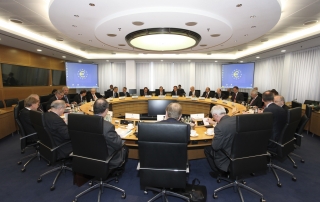
ECB Criticised for Lack of Transparency over Financial Crisis
Madrid/Brussels, 7 March 2014 – The European Central Bank (ECB) has once again come under fire for lack of transparency over the financial crisis, this time from the European Ombudsman who today regretted the decision not to release a letter sent to Ireland’s Finance Minister in November 2010. The ECB letter, which might reveal pressure on the Irish government to
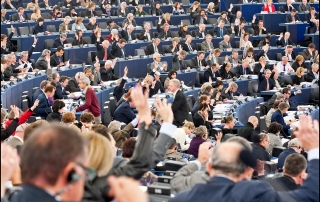
El Parlamento Europeo vota a favor de una mayor transparencia en su proceso de toma de decisiones
Madrid/Bruselas, 7 de marzo de 2014 - Access Info Europe celebra la decisión [1] del Parlamento Europeo de hacer más transparente su proceso de toma de decisiones mediante el registro y la publicación de las votaciones finales en comisión. Hasta ahora la mayor parte de los votos de las comisiones se hacían a mano alzada, sin registrar el sentido del

Access Info joins We Promise campaign to get European Parliament candidates to support 10 point Charter of Digital Rights
Madrid, 27 February 2014 – Access Info Europe today joined European civil society organisations campaigning for pledges from European Parliament election candidates to support the 10 point Charter of Digital Rights. This campaign is run EDRi, a network of European civil rights organisations defending digital rights. Between 22 and 25 May 2014, European Parliament elections will take place in 28
Lanzamiento de una nueva campaña global contra el secretismo en la contratación pública
Madrid, jueves 27 de febrero de 2014 - Hoy se lanza la nueva campaña global Stop Secret Contracts que pide a los líderes mundiales que terminen con el secretismo en la contratación pública. La campaña está coordinada por la Open Knowledge Foundation, y ha sido firmada por Access Info Europa junto con otros signatarios como Global Witness, Integrity Action, el
Open Data Day 2014: Open Government Standards
Madrid, 22 February 2014 - As open data activists around the world celebrate "Open Data Day" on 22 February 2014, Access Info Europe recalls that Open Data is an integral part of all work to promote open government and has been integrated into the core of the Open Government Standards, which are being promoted by civil society as a framework

European Parliament moves forward on Transparency of Company Ownership
Madrid, 21 February 2014 – In an important move with widespread implications for the defence of human rights and the fight against corruption, the European Parliament moved a step closer towards a legal obligation for companies to disclose their real or “beneficial” owners on 20 February 2014. The progress came in the form of a vote in favour of beneficial