
EMPODERANDO AL PERIODISMO A TRAVÉS DEL DERECHO DE ACCESO A LA INFORMACIÓN
EL MANUAL ‘LEGAL LEAKS’ AYUDA A PERIODISTAS A OBTENER
INFORMACIÓN USANDO LAS LEYES DE ACCESO A LA INFORMACIÓN
Why is the right of access to information important for journalism?
A Guide for Journalists on How to Access Information
The Legal Leaks Toolkit, developed by Access Info Europe and n-ost, helps journalists access information using Access to Information laws. The Toolkit is available in a generic international version and can be adapted to the legal framework of any country. The existing national versions, translated into local languages, are available below. You can also read more below about our training programme and about how to contact
the Legal Leaks Help Desk.
Why do media experts think access to information is important?
Journalists, activists, and media experts speak about the importance of access to information in their daily work. Watch all interviews here!
That little detail in the relationship between journalists and sources, that little one, is so important that could change the way in which we tell stories.
It is extremely important that there is this mechanism that you can use as a journalist to say «Hang on a minute, you need to give us this, because we have a right to know».
It’s a great way to get stories, it’s a great way to fin out what governments in particular are doing, it’s a great way to find out where money goes, it’s a great way to prove accountability.
The right of access to information is very important for the journalists’ work; it’s important for everyday work, but it’s even more important for investigations.
Journalism is about investigation, it’s about asking questions; but it’s about documents as well, as a proof for questions, as a proof for answers
Basically, I need access to information to do my job as someone who is supposed to ensure the accountability of politicians, of public officials.
Cover photo: European Parliament via Flickr (CC BY-NC-ND 2.0)
ÚLTIMAS NOTICIAS SOBRE EMPODERANDO AL PERIODISMO
ALTER EU Briefing on the Code of Conduct for Lobbyists
ALTER EU Briefing on the Code of Conduct for Lobbyists Brussels, 18 April 2013 – As part of the two-year revision of the EU’s transparency register, Access Info and ALTER EU have called for a strengthening of the Code of Conduct for Lobbyists, which applies to all those listed in the register.

Informe sobre el Registro de Transparencia
Bruselas, 18 de abril de 2013 – Deficiencias actuales del Registro de Transparencia: • Faltan demasiados actores esenciales. Aunque el número de inscritos de registro ha aumentado, hay demasiados actores activos del lobby que aún no están en la lista. Existen bufetes de abogados implicados en el lobby que siguen evadiendo la transparencia. • Información incompleta e inexacta. A pesar
Actualización sobre destino de las donaciones de la campaña de los 3.000 euros
Access Info Europe convocó una campaña de crowdfunding el 11 de enero de 2013 para recaudar los 3.000 euros que el Tribunal Supremo estableció en su condena costas por un caso que Access Info comenzó en 2007 para reclamar su derecho a conocer qué hace España para implementar medidas anticorrupción (ver todos los detalles del caso aquí). Durante esa campaña,
The use of online forms to make access to information requests
On tuderechoasaber.es, a platform to submit online FOI request to Spanish institutions, it has become more and more common to see Spanish institutions answer access to information requests with links to online forms. This practice is inappropriate because it places unnecessary obstacles in the way of accessing information as well as being uncommon in other countries. ¿Why is it not

Las instituciones han ignorado el 54% de las solicitudes de información tras 12 meses de debate público sobre transparencia
• Access Info Europe y la Fundación Ciudadana Civio presentan el Informe Tuderechoasaber.es 2012, que analiza las solicitudes de información enviadas a las instituciones desde esta web • Únicamente el 13% de las preguntas (75 de 567) obtuvo de las instituciones la información que requería el solicitante • La futura ley de transparencia es insuficiente y no permitirá mejorar
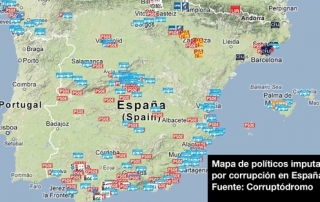
Pide al Gobierno que incluya a los partidos políticos en la futura Ley de Transparencia
Articulo actualizado, Madrid, 14 de marzo de 2013 — La petición Change.org de Access Info Europe, la Plataforma Tuderechoasaber.es y la Fundación Ciudadana Civio, solicitando al Gobierno que incluya a los partidos políticos en la futura Ley de Transparencia, ha conseguido mas de 178.000 firmas. Miembros de varias agrupaciones políticas han declarado recientemente a los medios de comunicación que están