
EMPODERANDO AL PERIODISMO A TRAVÉS DEL DERECHO DE ACCESO A LA INFORMACIÓN
EL MANUAL ‘LEGAL LEAKS’ AYUDA A PERIODISTAS A OBTENER
INFORMACIÓN USANDO LAS LEYES DE ACCESO A LA INFORMACIÓN
Why is the right of access to information important for journalism?
A Guide for Journalists on How to Access Information
The Legal Leaks Toolkit, developed by Access Info Europe and n-ost, helps journalists access information using Access to Information laws. The Toolkit is available in a generic international version and can be adapted to the legal framework of any country. The existing national versions, translated into local languages, are available below. You can also read more below about our training programme and about how to contact
the Legal Leaks Help Desk.
Why do media experts think access to information is important?
Journalists, activists, and media experts speak about the importance of access to information in their daily work. Watch all interviews here!
That little detail in the relationship between journalists and sources, that little one, is so important that could change the way in which we tell stories.
It is extremely important that there is this mechanism that you can use as a journalist to say «Hang on a minute, you need to give us this, because we have a right to know».
It’s a great way to get stories, it’s a great way to fin out what governments in particular are doing, it’s a great way to find out where money goes, it’s a great way to prove accountability.
The right of access to information is very important for the journalists’ work; it’s important for everyday work, but it’s even more important for investigations.
Journalism is about investigation, it’s about asking questions; but it’s about documents as well, as a proof for questions, as a proof for answers
Basically, I need access to information to do my job as someone who is supposed to ensure the accountability of politicians, of public officials.
Cover photo: European Parliament via Flickr (CC BY-NC-ND 2.0)
ÚLTIMAS NOTICIAS SOBRE EMPODERANDO AL PERIODISMO
La Coalición Pro Acceso pide una mejora integral del proyecto de ley de transparencia
De aprobarse con su contenido actual, es papel mojado Madrid 19 de febrero de 2013 – La Coalición Pro Acceso, que reúne a 65 organizaciones, hace un llamamiento a realizar una mejora integral al proyecto de ley de transparencia ya que, de aprobarse como está, perpetuará la opacidad que rige la vida pública española. De esta manera, se exige que
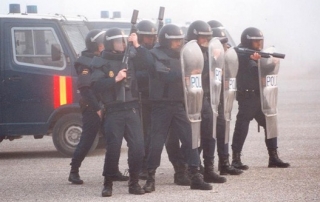
Lanzado un nuevo monitoreo sobre la transparencia de las políticas de protesta a nivel europeo
Madrid, 19 de febrero de 2013 – Preocupados por la falta de transparencia sobre el creciente uso de la fuerza policial durante las protestas, Access Info Europe ha enviado solicitudes de información a 41 países. En ellas se piden datos concretos sobre, por ejemplo, el uso de pelotas de goma, porras y cañones de agua a presión, así como información
La guía práctica Legal Leaks ya está disponible en italiano.
Milán 17 de febrero de 2013 – Hoy se ha presentado en Milán la guía práctica Legal Leaks, durante un encuentro que ha reunido a periodistas y representantes de diferentes organizaciones de la sociedad civil. La versión italiana del Legal Leaks Toolkit ha sido preparada por la organizacion Diritto di Sapere, con la aportación de Ernesto Belisario, abogado y fundador
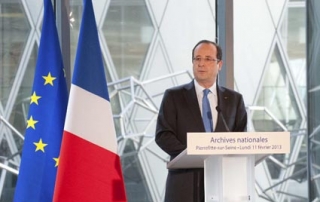
Amid confusion over French participation in the OGP: Access Info calls on France to join.
Morgane Dussud, Madrid, 15 February 2013 – Access Info Europe calls upon the French government to make clear its position on participation in the Open Government Partnership and to take steps to join the multilateral, multi-stakeholder initiative. As part of work around the Open Government Standards project, Access Info has been evaluating the current confused relationship between non-member France and
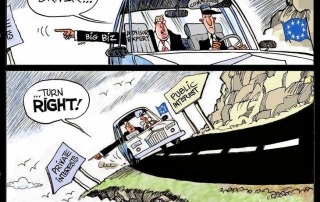
European Ombudsman investigates Commission’s alleged failure to tackle the Revolving Door
European Ombudsman investigates Commission’s alleged failure to tackle the Revolving Door Brussels, 14 February 2013 – Access Info’s steering committee colleagues Corporate Europe Observatory, Greenpeace, Lobbycontrol and Spinwatch, have together submitted a complaint to the European Ombudsman about the Commission’s repeated refusal to deal adequately with the potential conflicts of interest that could arise from the revolving door phenomenon. The
El Gobierno esquiva incluir a los partidos en la Ley de Transparencia
Madrid, 13 de febrero de 2013 - El Presidente del Gobierno, Mariano Rajoy, ha respondido esta mañana en sesión plenaria del Congreso de los Diputados a pregunta del grupo UPyD que va a “promover que los criterios de la Ley de Transparencia se apliquen a los partidos políticos”. Las organizaciones impulsoras de Tuderechoasaber.es, Access Info Europe y la Fundación Ciudadana