
EMPODERANDO AL PERIODISMO A TRAVÉS DEL DERECHO DE ACCESO A LA INFORMACIÓN
EL MANUAL ‘LEGAL LEAKS’ AYUDA A PERIODISTAS A OBTENER
INFORMACIÓN USANDO LAS LEYES DE ACCESO A LA INFORMACIÓN
Why is the right of access to information important for journalism?
A Guide for Journalists on How to Access Information
The Legal Leaks Toolkit, developed by Access Info Europe and n-ost, helps journalists access information using Access to Information laws. The Toolkit is available in a generic international version and can be adapted to the legal framework of any country. The existing national versions, translated into local languages, are available below. You can also read more below about our training programme and about how to contact
the Legal Leaks Help Desk.
Why do media experts think access to information is important?
Journalists, activists, and media experts speak about the importance of access to information in their daily work. Watch all interviews here!
That little detail in the relationship between journalists and sources, that little one, is so important that could change the way in which we tell stories.
It is extremely important that there is this mechanism that you can use as a journalist to say «Hang on a minute, you need to give us this, because we have a right to know».
It’s a great way to get stories, it’s a great way to fin out what governments in particular are doing, it’s a great way to find out where money goes, it’s a great way to prove accountability.
The right of access to information is very important for the journalists’ work; it’s important for everyday work, but it’s even more important for investigations.
Journalism is about investigation, it’s about asking questions; but it’s about documents as well, as a proof for questions, as a proof for answers
Basically, I need access to information to do my job as someone who is supposed to ensure the accountability of politicians, of public officials.
Cover photo: European Parliament via Flickr (CC BY-NC-ND 2.0)
ÚLTIMAS NOTICIAS SOBRE EMPODERANDO AL PERIODISMO
History of Right of Access to Information
History of Right of Access to Information Access to Information: A Fundamental Right, A Universal Standard, 17 January 2006. [cited in the Parliamentary Assembly of the Council of Europe during the debate on the new Convention on Access to Official Documents in October 2008]. · 1766 – Sweden adopts world’s first access to information law: The law establishes press freedom,
«Legal Leaks»: Access to information and data security for journalists
Journalists play a central role in initiating and stimulating public debates but face constant challenges in accessing information from public bodies, particularly when that information relates to issues such as corruption and organised crime, violations of human rights, controversial international relations, environmental contamination, relationships with business and lobby groups, and the more sensitive aspects of EU integration. These challenges are
Civil Liberties
Promoting access to information for defence of civil liberties and human rights In the past decade, the European Union and its member states have introduced a large number of measures which are designed to prevent and combat terrorism. These measures include communications data retention, biometric passports, DNA collection and CCTV surveillance. In the post-September 11th climate it has proven remarkably
Spain: Coalicion Pro Acceso
7 October 2008 Spanish President Zapatero commits to adopt an access to information law Access Info welcomed today's announcement by the Spanish Government and called for the drafting of the law to be open and transparent, with full participation of civil society. Spanish President José Luis Rodríguez Zapatero speaking today at the closing of the 64th Assembly of the Inter-American Press
European Union key problems
Access Info has identified some key problems with EU transparency: People are having problems getting access to information: the European Ombudsman’s report for 2008 says that 36% of citizens’ complaints relate to transparency and access to documents. But at the same time, most users of the EU’s access rules are businesses rather than journalists, civil society organisations or members of
Council of Europe Intro Section
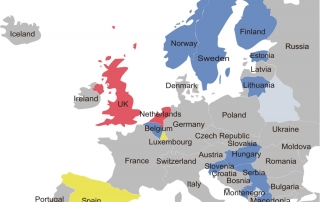
Council of Europe Convention on Access to Official Documents The world’s first treaty on the right to know was adopted by the Council of Europe on 27 November 2008. This treaty, the Council of Europe Convention on Access to Official Documents, was opened for signature on 18 June. Any of the 47 member states of the Council of Europe can