
EMPODERANDO AL PERIODISMO A TRAVÉS DEL DERECHO DE ACCESO A LA INFORMACIÓN
EL MANUAL ‘LEGAL LEAKS’ AYUDA A PERIODISTAS A OBTENER
INFORMACIÓN USANDO LAS LEYES DE ACCESO A LA INFORMACIÓN
Why is the right of access to information important for journalism?
A Guide for Journalists on How to Access Information
The Legal Leaks Toolkit, developed by Access Info Europe and n-ost, helps journalists access information using Access to Information laws. The Toolkit is available in a generic international version and can be adapted to the legal framework of any country. The existing national versions, translated into local languages, are available below. You can also read more below about our training programme and about how to contact
the Legal Leaks Help Desk.
Why do media experts think access to information is important?
Journalists, activists, and media experts speak about the importance of access to information in their daily work. Watch all interviews here!
That little detail in the relationship between journalists and sources, that little one, is so important that could change the way in which we tell stories.
It is extremely important that there is this mechanism that you can use as a journalist to say «Hang on a minute, you need to give us this, because we have a right to know».
It’s a great way to get stories, it’s a great way to fin out what governments in particular are doing, it’s a great way to find out where money goes, it’s a great way to prove accountability.
The right of access to information is very important for the journalists’ work; it’s important for everyday work, but it’s even more important for investigations.
Journalism is about investigation, it’s about asking questions; but it’s about documents as well, as a proof for questions, as a proof for answers
Basically, I need access to information to do my job as someone who is supposed to ensure the accountability of politicians, of public officials.
Cover photo: European Parliament via Flickr (CC BY-NC-ND 2.0)
ÚLTIMAS NOTICIAS SOBRE EMPODERANDO AL PERIODISMO

European Commission formalises commitment to public travel expenses
Madrid, 2 February 2018 - The European Commission has formalised its commitment, first pledged in September 2017, to make public the travel expenses of the Commissioners: on 31 January 2018 the new Code of Conduct for the Members of the European Commission was published and it confirms that mission expenses will be published every two months. This commitment in the
Más de 50 iniciativas se inscriben en el Registro de Lobbies del Ayuntamiento en su primer mes de vida
La Vanguardia | 02/02/2018 Español - Más de 50 iniciativas se han inscrito en sólo un mes, el primero de vida, en el Registro de Lobbies del Ayuntamiento de Madrid, una herramienta que aprende de experiencias como la catalana, la pionera, con nueve lobbies inscritos en su primer año en funcionamiento. Leer más...
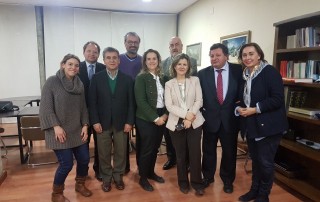
Encuentro Hispano-Chileno sobre Transparencia
Fecha: 01/02/2018 Lugar: Facultad de Ciencias de la Información de la Universidad Complutense de Madrid.
Reunión del Grupo de Trabajo de Transparencia y Rendición de Cuentas del III Plan de Acción de España 2017-2019 de la Alianza para el Gobierno Abierto
Fecha: 31/01/2018 a las 11.30 Lugar: Sede del Ministerio de Hacienda y Función Pública, Madrid
Defensa lleva a juicio a Transparencia para ocultar documentos ya publicados en 2012
El Confidencial | 19/01/2018 Español - La desclasificación de 10.000 documentos secretos de la Guerra Civil y la dictadura franquista planteada por la socialista Carme Chacón lleva seis años aparcada en los cajones del Ministerio de Defensa, y así permanecerá a corto plazo. Leer más...
Leave no trace: the right to information and the duty to document
This report, Leave No Trace, contains the first comprehensive research into the laws, guidelines, and practices on record keeping across a range of 12 European jurisdictions and the European Commission. It reveals an extremely weak legal infrastructure and hugely variable practice on record keeping, which is undermining the public’s right of access to information: it is impossible to obtain documents