
EMPODERANDO AL PERIODISMO A TRAVÉS DEL DERECHO DE ACCESO A LA INFORMACIÓN
EL MANUAL ‘LEGAL LEAKS’ AYUDA A PERIODISTAS A OBTENER
INFORMACIÓN USANDO LAS LEYES DE ACCESO A LA INFORMACIÓN
Why is the right of access to information important for journalism?
A Guide for Journalists on How to Access Information
The Legal Leaks Toolkit, developed by Access Info Europe and n-ost, helps journalists access information using Access to Information laws. The Toolkit is available in a generic international version and can be adapted to the legal framework of any country. The existing national versions, translated into local languages, are available below. You can also read more below about our training programme and about how to contact
the Legal Leaks Help Desk.
Why do media experts think access to information is important?
Journalists, activists, and media experts speak about the importance of access to information in their daily work. Watch all interviews here!
That little detail in the relationship between journalists and sources, that little one, is so important that could change the way in which we tell stories.
It is extremely important that there is this mechanism that you can use as a journalist to say «Hang on a minute, you need to give us this, because we have a right to know».
It’s a great way to get stories, it’s a great way to fin out what governments in particular are doing, it’s a great way to find out where money goes, it’s a great way to prove accountability.
The right of access to information is very important for the journalists’ work; it’s important for everyday work, but it’s even more important for investigations.
Journalism is about investigation, it’s about asking questions; but it’s about documents as well, as a proof for questions, as a proof for answers
Basically, I need access to information to do my job as someone who is supposed to ensure the accountability of politicians, of public officials.
Cover photo: European Parliament via Flickr (CC BY-NC-ND 2.0)
ÚLTIMAS NOTICIAS SOBRE EMPODERANDO AL PERIODISMO
Espacio para la responsabilidad – La regulación de los lobbies
Rtve.es | 31/05/2015 Español- La colalición ¡transparencia del lobby ya! es una plataforma cuyo objetivo es reivindicar e impulsar la creación de un marco regulatorio para el lobby en España basado en la transparencia, la integridad y la participación. Hemos hablado con Alba Gutiérrez de Access Info Europe. Leer más...
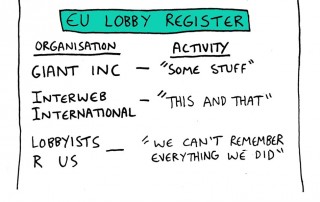
Access Info defends citizens’ right to know as part of lobby transparency reforms
Madrid, 6 June 2016 – Access Info Europe has called on the European Union and the Council of Europe to ensure that future lobby control rules that both are in the process of developing are fully in line with The International Standards for Lobbying Regulation. In submissions to separate public consultations held by the EU and Council of Europe, the
Primer Campo de Transparencia en Europa
Fecha: 1 Junio, 2016 Lugar: Amsterdam
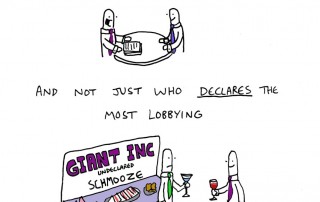
Give the Commission your views on EU lobbying!
This article was originally published by ALTER-EU. Brussels, 23 May 2015 - Do you want to see more transparency about who is lobbying who in Brussels and the EU institutions? Are you angry about the privileged access that corporate lobbyists get to EU decision-makers, whether it be on TTIP, tobacco, climate, regulation, digital rights...? The European Commission is consulting about
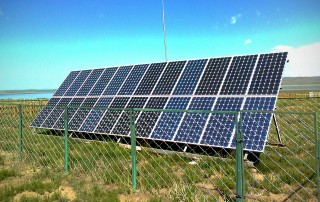
Spain’s extortionate Sunshine Tax is “a final solution for renewable energy”: What do the documents tell us?
Madrid, 19 May 2016 - On the day that the news is full of the fact that Portugal this month had four straight days of zero emissions energy production using renewable sources (full story here), documents obtained by Access Info Europe using Spain’s Transparency Law reveal the tense political battles behind a controversial 2015 law that imposes prohibitive taxes on
Soria copió a Endesa el intento de prohibir el autoconsumo eléctrico a los usuarios más vulnerables
El Diario | 12/05/2016 Español Industria incluyó en uno de los últimos borradores del decreto de autoconsumo dos párrafos que había sugerido la eléctrica. Tras las protestas de diversos sectores, el Ministerio se echó atrás y acabó permitiendo autoconsumir a clientes con bono social o tarifa regulada de la luz. Iberdrola expuso en julio de 2013 argumentos a favor del