
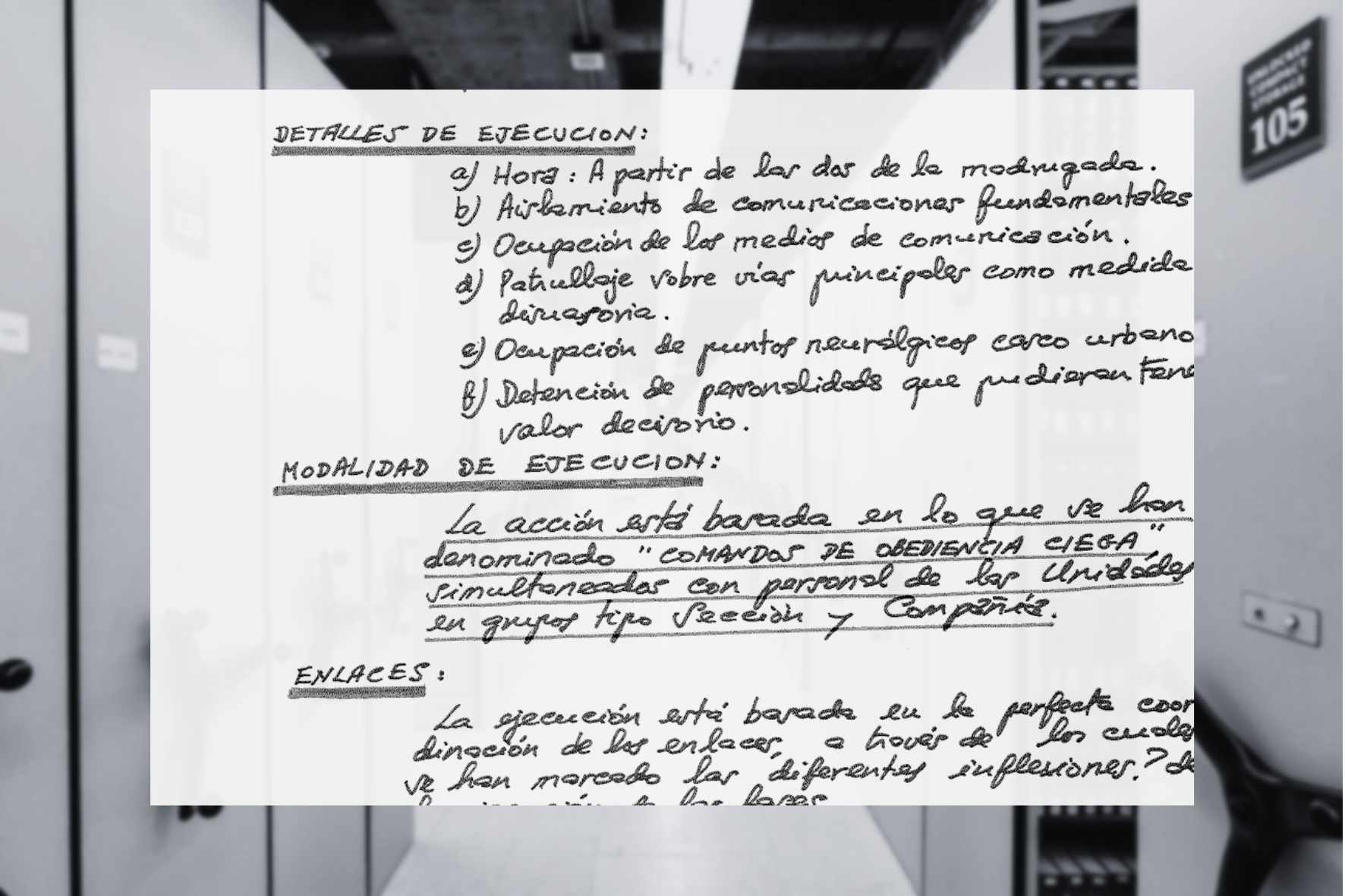
Madrid, 25 February 2026 — Access Info Europe welcomes the decision by the Spanish Government to declassify documents relating to the attempted coup d’état of 23 February 1981, a move that acknowledges the public’s right to know about events that profoundly shaped Spain’s democratic history.
For decades, these documents remained inaccessible under the shadow of a Franco-era law — the 1968 Official Secrets Act — which, despite Spain’s transition to democracy, has continued to govern classified information without clear declassification deadlines or effective independent oversight. Its origins and outdated nature have been widely criticised by human rights organisations, historians and members of parliament, as it imposes restrictions that fall short of modern democratic standards of transparency.
Making significant historical records accessible to the public strengthens trust in institutions and deepens democratic culture. The declassification of documents relating to Spain’s attempted coup on 23 February 1981 is a powerful case in point.
This decision comes at a time when the proposed Classified Information Bill — intended to replace the 1968 law — remains stalled in Spain’s parliament, the Congress of Deputies.
Access Info Europe maintains that legislation on classified information must adhere to some key principles, including:
- Respect for fundamental rights: The law must safeguard fundamental rights, particularly freedom of information and the right of access to public information. It should also ensure that information relating to serious human rights violations or crimes against humanity is never classified.
- Justification for classification: Decisions to classify information must be grounded in legality, necessity and proportionality, recognising that classification should be the exception rather than the rule.
- Reasonable time limits for declassification: Excessively long timeframes that prevent public scrutiny for decades should be avoided.
- Independent oversight: Decisions on classification, reclassification and declassification must be subject to independent review.
The declassification of the 23-F documents serves as a reminder that transparency and the right to information are cornerstones of a healthy democracy. These are not merely symbolic gestures, but essential tools for strengthening justice, collective memory and civic participation. Access Info Europe will continue to advocate for a legal framework that recognises access to information as a fundamental right for everyone.
All declassified documents relating to 23-F are available on the website of La Moncloa, the seat of the Spanish Government.