
EMPODERANDO AL PERIODISMO A TRAVÉS DEL DERECHO DE ACCESO A LA INFORMACIÓN
EL MANUAL ‘LEGAL LEAKS’ AYUDA A PERIODISTAS A OBTENER
INFORMACIÓN USANDO LAS LEYES DE ACCESO A LA INFORMACIÓN
Why is the right of access to information important for journalism?
A Guide for Journalists on How to Access Information
The Legal Leaks Toolkit, developed by Access Info Europe and n-ost, helps journalists access information using Access to Information laws. The Toolkit is available in a generic international version and can be adapted to the legal framework of any country. The existing national versions, translated into local languages, are available below. You can also read more below about our training programme and about how to contact
the Legal Leaks Help Desk.
Why do media experts think access to information is important?
Journalists, activists, and media experts speak about the importance of access to information in their daily work. Watch all interviews here!
That little detail in the relationship between journalists and sources, that little one, is so important that could change the way in which we tell stories.
It is extremely important that there is this mechanism that you can use as a journalist to say «Hang on a minute, you need to give us this, because we have a right to know».
It’s a great way to get stories, it’s a great way to fin out what governments in particular are doing, it’s a great way to find out where money goes, it’s a great way to prove accountability.
The right of access to information is very important for the journalists’ work; it’s important for everyday work, but it’s even more important for investigations.
Journalism is about investigation, it’s about asking questions; but it’s about documents as well, as a proof for questions, as a proof for answers
Basically, I need access to information to do my job as someone who is supposed to ensure the accountability of politicians, of public officials.
Cover photo: European Parliament via Flickr (CC BY-NC-ND 2.0)
ÚLTIMAS NOTICIAS SOBRE EMPODERANDO AL PERIODISMO
Victoria Anderica: «Queremos crear una ordenanza que obligue a dar la máxima información»
Eldiario.es | 26/06/2015 Español – El Ayuntamiento de Madrid, liderado por Manuela Carmena, ha nombrado a la activista Victoria Anderica directora del proyecto de transparencia, dependiente de la Concejalía de Participación Ciudadana, Transparencia y Gobierno Abierto, responsabilidad de Pablo Soto. Anderica, licenciada en Derecho y con un máster en Comunicación, Cultura y Ciudadanía Digitales, ha trabajado durante cinco años en el proyecto Access Info,
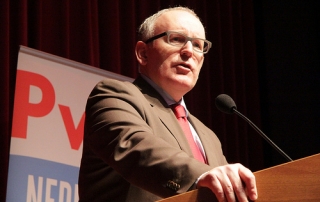
European Commission urged to act to improve transparency
Madrid, 24 June 2015 – In a letter to European Commission Vice-President Timmermans as part of an ongoing dialogue, Access Info Europe has called for action to improve EU transparency in law and in practice. The pro-transparency organisation stressed the urgent need to bring the EU’s access to documents rules into line with international standards, and raised concerns about problems
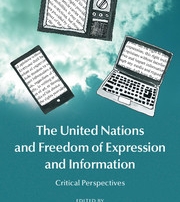
Ten Challenges for the Right to Information in the Age of Mega-Leaks
In the recently published book "The UN and Freedom of Expression and Information - Critical Perspectives", from Cambridge University Press, Access Info’s Executive Director Helen Darbishire maps the current state of the right of access to information and sets out some of the challenges currently facing the right. Darbishire notes that although the world’s first access to information law was

Transparencia y gobierno abierto: realidades y aplicación práctica
Fecha: 22-24 Junio 2015 Lugar: Península de la Magdalena, Santander

European Commission fails to prove the need for its postal addresses policy
Madrid, 19 June 2015 – Access Info Europe this week expressed concern at the European Commission’s insistence on maintaining its obstructive requirement for all documents requesters to provide their postal addresses, after the Commission admitted in response to parliamentary questions that the policy is based on just one case of “abuse” over the past 14 years. Answering a parliamentary question
Transparency is Essential for a Credible Post-2015 Development Agenda
Madrid, 19 June 2015 – Access Info Europe has joined civil society organisations from around the globe in calling on the UN to take significant steps to integrate transparency, accountability and participation more fully into the Post-2015 development agenda. In proposing a series of crucial edits to the “Zero Draft” of the Outcome Document for the Post-2015 Development Agenda, the