
EMPODERANDO AL PERIODISMO A TRAVÉS DEL DERECHO DE ACCESO A LA INFORMACIÓN
EL MANUAL ‘LEGAL LEAKS’ AYUDA A PERIODISTAS A OBTENER
INFORMACIÓN USANDO LAS LEYES DE ACCESO A LA INFORMACIÓN
Why is the right of access to information important for journalism?
A Guide for Journalists on How to Access Information
The Legal Leaks Toolkit, developed by Access Info Europe and n-ost, helps journalists access information using Access to Information laws. The Toolkit is available in a generic international version and can be adapted to the legal framework of any country. The existing national versions, translated into local languages, are available below. You can also read more below about our training programme and about how to contact
the Legal Leaks Help Desk.
Why do media experts think access to information is important?
Journalists, activists, and media experts speak about the importance of access to information in their daily work. Watch all interviews here!
That little detail in the relationship between journalists and sources, that little one, is so important that could change the way in which we tell stories.
It is extremely important that there is this mechanism that you can use as a journalist to say «Hang on a minute, you need to give us this, because we have a right to know».
It’s a great way to get stories, it’s a great way to fin out what governments in particular are doing, it’s a great way to find out where money goes, it’s a great way to prove accountability.
The right of access to information is very important for the journalists’ work; it’s important for everyday work, but it’s even more important for investigations.
Journalism is about investigation, it’s about asking questions; but it’s about documents as well, as a proof for questions, as a proof for answers
Basically, I need access to information to do my job as someone who is supposed to ensure the accountability of politicians, of public officials.
Cover photo: European Parliament via Flickr (CC BY-NC-ND 2.0)
ÚLTIMAS NOTICIAS SOBRE EMPODERANDO AL PERIODISMO
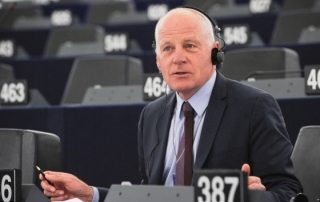
Congratulations from the European Parliament and Michael Cashman on the ECJ ruling, Council v Access Info Europe
Madrid, 22 October 2013 – The European Parliament has issued a statement welcoming the 17 October 2013 ruling by the European Court of Justice in the case of Council v Access Info Europe Case C-280/11 P stating that EU citizens need a clearer and wider access to the decision-making process. The European Parliament had joined Access Info Europe in
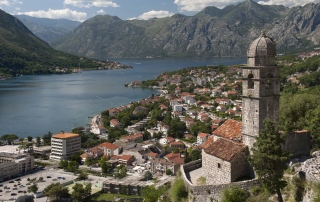
Civil society outlines concerns to DG Enlargement about Montenegrin efforts to combat corruption
Podgorica/Madrid, 23 October 2013 - Today, Access Info with Montenegrin and international civil society organisations outlined concerns about Montenegro's efforts to combat corruption and organised crime, highlighting the reduction of information publically available on the national company register, in a letter sent to Mr. Dirk Lange, the Head of Unit for Montenegro within the European Commission's Directorate General for Enlargement.
El Tribunal de Justicia Europeo falla a favor de una mayor transparencia del Consejo de la UE
Opiniones y comentarios del Consejo Asesor Internacional de Access Info Madrid, 22 de octubre de 2013 - Tras la histórica jurisprudencia sentada por la resolución definitiva del Tribunal de Justicia de la Unión Europea (TJUE) que desestimaba por completo la apelación del Consejo de la Unión Europea, en una batalla de cinco años de duración por hacer público el acceso
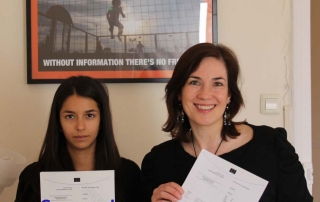
El Tribunal de Justicia de la Unión Europea se pronuncia a favor de una mayor transparencia del Consejo de la UE
Madrid/Luxemburgo, 17 de octubre de 2013 — El Tribunal Europeo de Justicia ha rechazado hoy los argumentos, formulados por el Consejo de la Unión Europea y por el gobierno de España, que buscaban mantener en secreto la identidad de los Estados Miembro a la hora de proponer enmiendas legislativas durante los debates en el Consejo. Este es el fallo final
Principales deficiencias de la ley de transparencia señaladas por Victoria Anderica en ‘El Objetivo’
Madrid, 14 de octubre de 2013 - "La ley no reconoze el acceso a información como un derecho fundamental,... queda mucha información fuera,... y el organismo de revisión no es independiente". Estas tres deficiencias de la ley de transparencia fueron señaladas por Victoria Anderica de Access Info Europe en la hora de audiencia del programa de televisión El Objetivo. En
El Tribunal Constitucional inadmite a trámite un recurso sobre acceso a la información
El 13 de septiembre de 2013 el Tribunal Constitucional inadmitió a trámite el recurso de un miembro de Access Info Europe contra el Ministerio de Defensa por un caso de denegación de información. En esta decisión el Tribunal Constitucional alega que se inadmite el recurso dada la manifiesta inexistencia de violación de un derecho fundamental tutelable en amparo. En pleno