
EMPODERANDO AL PERIODISMO A TRAVÉS DEL DERECHO DE ACCESO A LA INFORMACIÓN
EL MANUAL ‘LEGAL LEAKS’ AYUDA A PERIODISTAS A OBTENER
INFORMACIÓN USANDO LAS LEYES DE ACCESO A LA INFORMACIÓN
Why is the right of access to information important for journalism?
A Guide for Journalists on How to Access Information
The Legal Leaks Toolkit, developed by Access Info Europe and n-ost, helps journalists access information using Access to Information laws. The Toolkit is available in a generic international version and can be adapted to the legal framework of any country. The existing national versions, translated into local languages, are available below. You can also read more below about our training programme and about how to contact
the Legal Leaks Help Desk.
Why do media experts think access to information is important?
Journalists, activists, and media experts speak about the importance of access to information in their daily work. Watch all interviews here!
That little detail in the relationship between journalists and sources, that little one, is so important that could change the way in which we tell stories.
It is extremely important that there is this mechanism that you can use as a journalist to say «Hang on a minute, you need to give us this, because we have a right to know».
It’s a great way to get stories, it’s a great way to fin out what governments in particular are doing, it’s a great way to find out where money goes, it’s a great way to prove accountability.
The right of access to information is very important for the journalists’ work; it’s important for everyday work, but it’s even more important for investigations.
Journalism is about investigation, it’s about asking questions; but it’s about documents as well, as a proof for questions, as a proof for answers
Basically, I need access to information to do my job as someone who is supposed to ensure the accountability of politicians, of public officials.
Cover photo: European Parliament via Flickr (CC BY-NC-ND 2.0)
ÚLTIMAS NOTICIAS SOBRE EMPODERANDO AL PERIODISMO
Campaña #SenadoTransparente Firma la petición en Change.org
Madrid, 4 de octubre de 2013 - Hoy las organisaciones de la sociedad civil; Access Info Europe, Fundación Ciudadana Civio, Open Knowledge Foundation España, OpenKratio, Proyecto Avizor, y Qué hacen los diputados, han lanzado una petición a traves de Change.org al grupo del PP en el Senado para conseguir enmiendas urgentes a la ley de transparencia. ¡Firma la petición "Grupo
Elecciones Europeas 2014: La transparencia tiene que ser una prioridad, les dijeron a los parlamentarios
Madrid, 2 de octubre de 2013 – Acercándose las elecciones europeas de mayo de 2014, Access Info ha hoy escrito una carta a todos los 766 miembros del Parlamento Europeo informándoles de los resultados de una encuesta de opinión que muestra un enorme apoyo a la transparencia en áreas como la crisis financiera y el lobby empresarial. Más del 80%
El Tribunal de Justicia Europeo dará sentencia final sobre el acceso público a documentos del Consejo
Madrid, 2 de Octubre de 2013 – El Tribunal de Justicia de la Unión Europea (TJUE) anunciará formalmente su decisión final en el caso Access Info v Consejo de la Unión Europea el día 17 de octubre de 2013, después de cuatro años de batalla legal. La segunda instancia del TJUE tendrá ahora la última palabra sobre si es legítimo
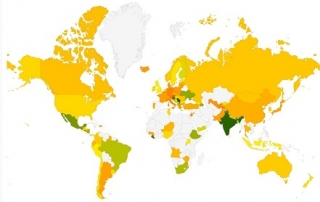
RTI update 2013
RTI Rating: Update and Overview of Results and Trends Quatlity of access to information laws around the world, www.rti-rating.org 28 September 2013, Halifax/Madrid - Access Info Europe (Spain) and the Centre for Law and Democracy (Canada) are today launching a report providing an analysis of the results and trends in the global RTI Rating, which assesses the legal framework for
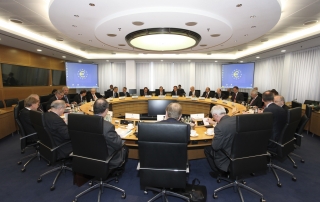
ECB urged to review refusals
Brussels, 27 September 2013 -The European Central Bank regularly invokes the need to protect monetary policy and the financial stability of the Union and its Member States when refusing access to information a report by Access Info presented in Brussels today has revealed. Requesters are often seeking information about exchanges with Member States on the financial crisis. One third (36%)
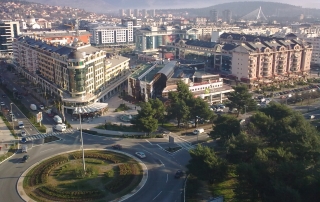
Montenegrin Company Register must remain open to public
Madrid, 26 September 2013 - Access Info Europe today published an open letter calling upon the Montenegin authorities to provide full access to the national company register, and other registers without delay, after learning that it will be closed from public access on the grounds of data privacy. Access Info argues that EU data protection rules do not require the